
Criminal Cases in DeSoto Parish Courts
The 42nd Judicial District Court is Louisiana's general-jurisdiction trial court for DeSoto Parish. It has original criminal, civil, and juvenile jurisdiction and operates in two divisions. The DeSoto Parish Clerk's Criminal Division records citations, indictments, arraignments, filings, minutes, dispositions, and sentencing material. Juvenile matters and cases sealed by court order are not part of ordinary public access.
A case number ties the docket to its court and filing. It is stronger than a name alone. Municipal ordinance matters may remain with a city or mayor's court, so not every citation belongs in the 42nd JDC index. Stonewall Mayor's Court, for example, is a separate local channel. The clerk also does not collect criminal-sentence fines or traffic payments. Those generally route through DPSO even though the Clerk holds the case file.
DeSoto Parish Court Map
The official 42nd JDC site identifies the district court and its DeSoto Parish jurisdiction. It is the right court layer for felony and other parish prosecutions, while the Clerk is the custodian that provides the docket and documents.
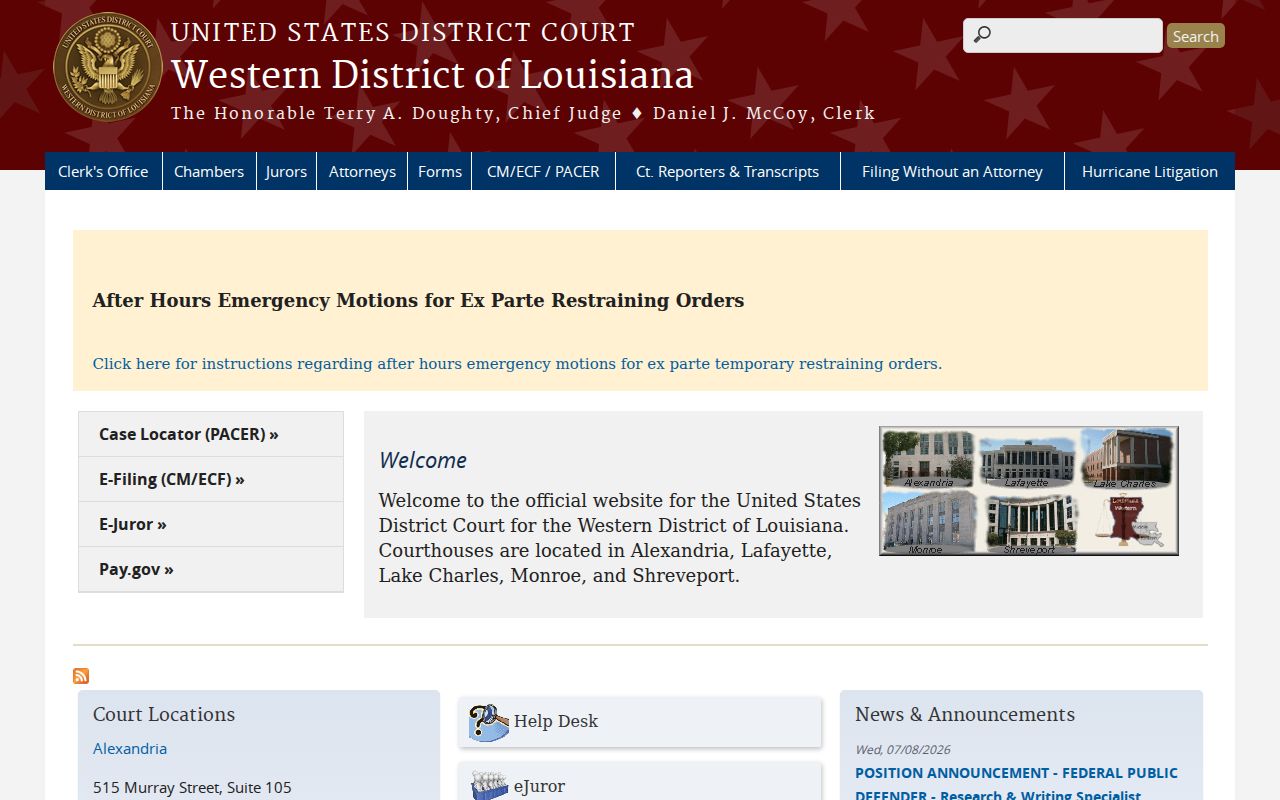
This captured source is the Western District of Louisiana, which matters only for federal cases. A federal prosecution is not a 42nd JDC file, even if the conduct occurred in DeSoto Parish. Keeping the federal and parish systems apart avoids searching the wrong docket.
How to Search Case Records
The ClerkNet public-record interface is the first remote channel. Its landing page offers clerk search and e-service access, though exact public fields and coverage can vary. Use the strongest identifier available. When an index result is absent or unclear, call the main criminal counter, contact Archives for older material, ask the Stonewall satellite what clerk services it can perform, or send a precise written request.
- Open ClerkNet and select the available court-record search path.
- Search by case number when known, or use the party name with spelling variants, including DeSoto and De Soto in broader source searches.
- Compare filing year, court, party, and charge data before opening a candidate docket.
- Read the docket sequence and identify the charging instrument, final disposition, and sentencing minute.
- Contact the DeSoto Parish Clerk to inspect the file or order ordinary or certified copies.
| Field or locator | Type | Required | Use |
|---|---|---|---|
| Party name | Text | Search-path dependent | Try full and alternate spellings |
| Case number | Text | No | Strongest direct locator |
| Filing year | Date or filter | No | Narrows common names |
| Case type | Filter | No | Choose criminal where offered |
| Division or judge | Result field | No | Confirms the 42nd JDC file |
Reading DeSoto Parish ClerkNet
The manifest capture from ClerkNet shows the official parish search surface rather than a commercial case aggregator. Treat the result list as an index. It can point to a DeSoto Parish criminal case file, but the filed documents and certified clerk copies remain the better proof of what happened.
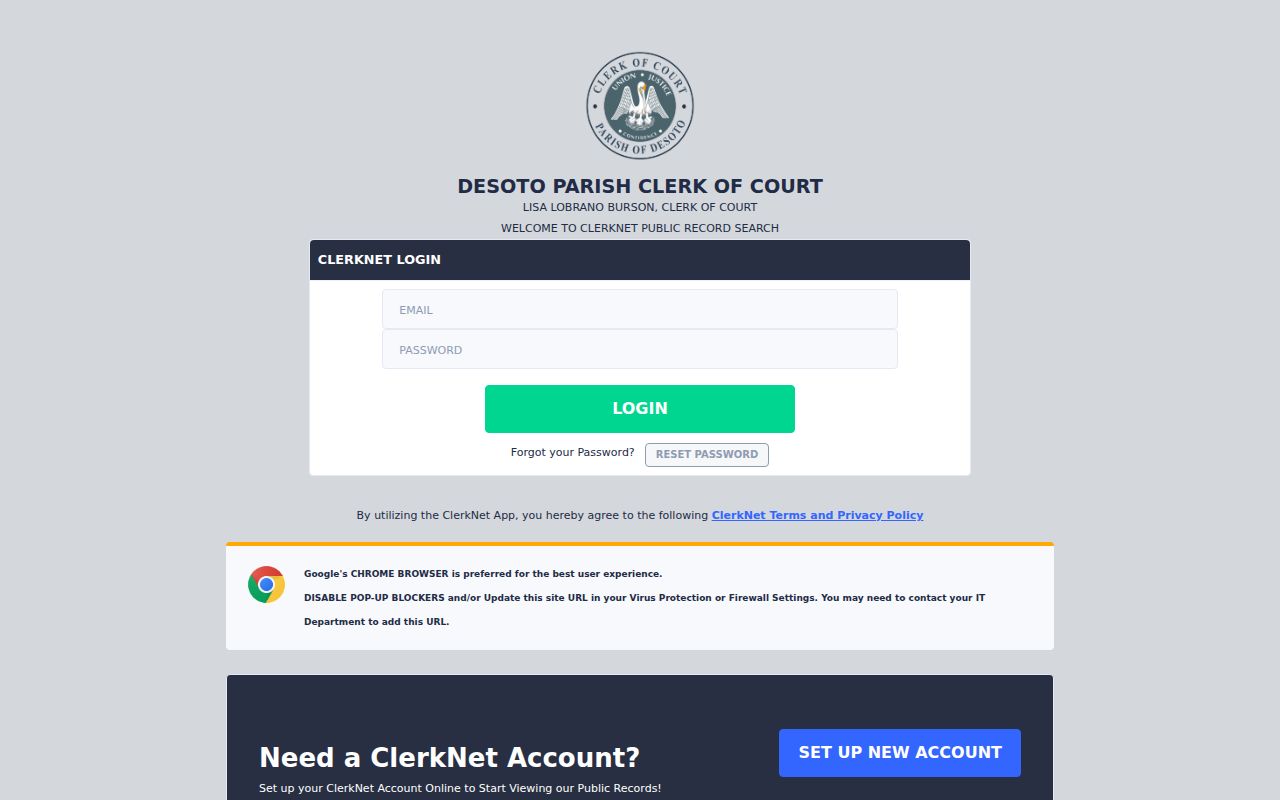
A searcher should note the case number, filing date, division, status, party, counsel, and listed charges, then trace the event entries through judgment. If only an arrest label appears elsewhere, do not import it into the court result. Prosecutors may decline, amend, dismiss, or replace an initial charge.
What the Case File Shows
A DeSoto Parish case file is built in stages. The docket or index is the table of contents. The charging instrument states what the prosecutor filed. Arraignment minutes record the plea, while later entries can show motions, hearings, trial activity, amended charges, and judgment. The final disposition and sentencing minute are usually the most useful documents for resolving the case.
| Case number & court | Identifies the 42nd JDC file, filing date, division, judge, and status. |
|---|---|
| Charging document | Shows the bill, indictment, citation, or amended charges actually filed. |
| Docket entries | Chronological filings, minutes, motions, rulings, pleas, and capias activity. |
| Hearing dates | Scheduled and completed court events, subject to later change. |
| Disposition & judgment | Outcome for each filed charge, including dismissal, plea, acquittal, or conviction. |
| Sentence & conditions | Custody, probation, financial terms, and conditions recorded by the court. |
A probable-cause or arrest affidavit appears only if it was filed. A public plea agreement may be present, but no searcher should assume every negotiation is in the accessible file. Protected identifiers can also be redacted.
DeSoto Parish Case Copy Costs
The Clerk publishes a clear criminal-copy schedule. Ordinary criminal documents other than minutes cost $1 per page. Certification adds $5 for each document. A court-minute extract for a date costs $10, with another $5 for certification. Credit and debit cards are not accepted for criminal copies. Ask for an estimate and state whether plain or certified copies are needed.
| Record | Published cost |
|---|---|
| Ordinary criminal document | $1 per page |
| Certification | $5 more per document |
| Court minute extract/date | $10 |
| Certified minute | $5 more |
| Card payment | Not accepted |
The main counter is at 101 Texas Street in Mansfield and publishes weekday hours of 8:30 a.m. to 4:30 p.m. Call 318-872-3110 before a detailed visit. Those ordering older files should ask whether the material is at the separate Archives Building before traveling.
Stages of a Criminal Case
A custodial arrest may precede a court case, but the district attorney's filing choice starts the court record. The defendant is arraigned on the filed accusation. Pretrial motions and discovery may change what reaches a plea or trial. A disposition resolves each charge, and sentencing records the court's terms after a conviction. No official DeSoto Parish source gives one standard time for these stages, so the docket should be read as the case-specific timeline.
Case flow: Charges Filed › Arraignment › Pretrial › Plea or Trial › Disposition › Sentencing
A capias, attachment, probation filing, or revocation can add later entries. Current custody or supervision may then appear through DPSO or Louisiana DPS&C, but the court minutes remain the source for what sentence was imposed.
Reading DeSoto Parish Dispositions
Read each charge line to its own outcome. “Dismissed” applies to a filed count, not necessarily the whole event. A guilty plea may be entered to an amended statute. An acquittal follows a trial decision. A conviction states the legal result but still requires the sentencing minute to show punishment and conditions. If the docket uses a short label that is unclear, ask the Clerk for the related minute rather than guessing.
- Arraignment
- The hearing at which the filed accusation is presented and a plea is entered.
- Disposition
- The final procedural outcome assigned to a particular charge.
- Minute
- The clerk's record of what occurred in court on a stated date.
- Capias
- A court-issued command that can arise from a pending case or failure to appear.
- Certified disposition
- A clerk-authenticated outcome used to prove or correct the case result.
Older DeSoto Parish Case Files
An online miss is not proof that an older DeSoto Parish case never existed. The Clerk maintains a dedicated Archives Building at 214 Washington Avenue in Mansfield, with a published phone number of 318-270-6207. Call with the case number, defendant name, approximate year, document type, and certification request. Staff can then explain whether the material is at the main counter or off site.
The Stonewall clerk counter at 1746 Highway 171, Suite B, publishes weekday hours of 8:30 a.m. to 3:30 p.m. Its telephone numbers are 318-925-6655 and 318-925-6658. Confirm that the precise criminal service is available there before visiting. A Stonewall mayor's-court record is separate from this satellite clerk access.
District 42 Defense Records
The Louisiana public defender's District 42 profile confirms the local defense district serving DeSoto Parish. The defense office is not the public custodian of the court docket, but its presence helps explain why counsel information can appear alongside the State as prosecuting party in the case file.
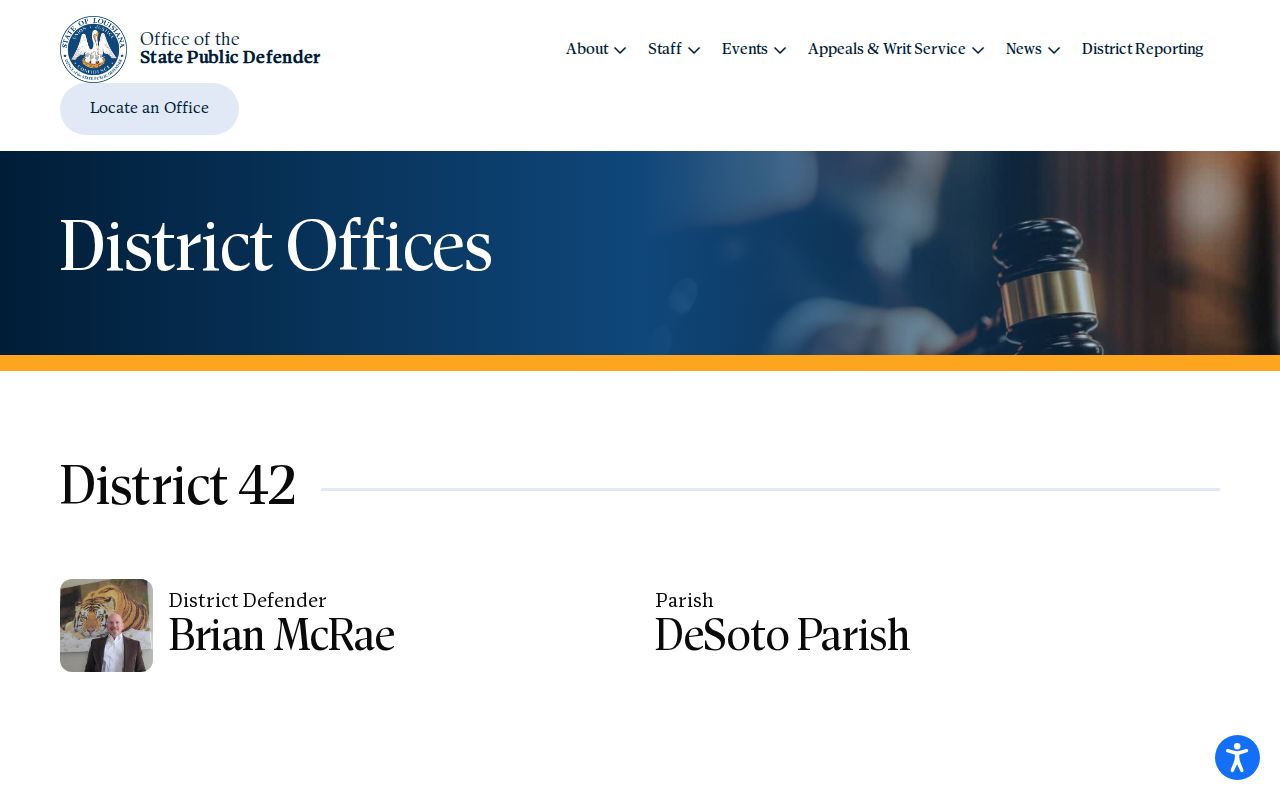
The profile is useful for routing representation questions. Requests for public pleadings, minutes, and certified outcomes still go to the DeSoto Parish Clerk, while attorney-client files are not public court records.
Federal Cases Beyond DeSoto Parish
DeSoto Parish lies in the U.S. District Court for the Western District of Louisiana, and federal appeals go to the Fifth Circuit. Federal cases do not automatically appear in ClerkNet. PACER searches federal dockets by court, party, or case number, requires an account, and may charge under its current fee schedule.
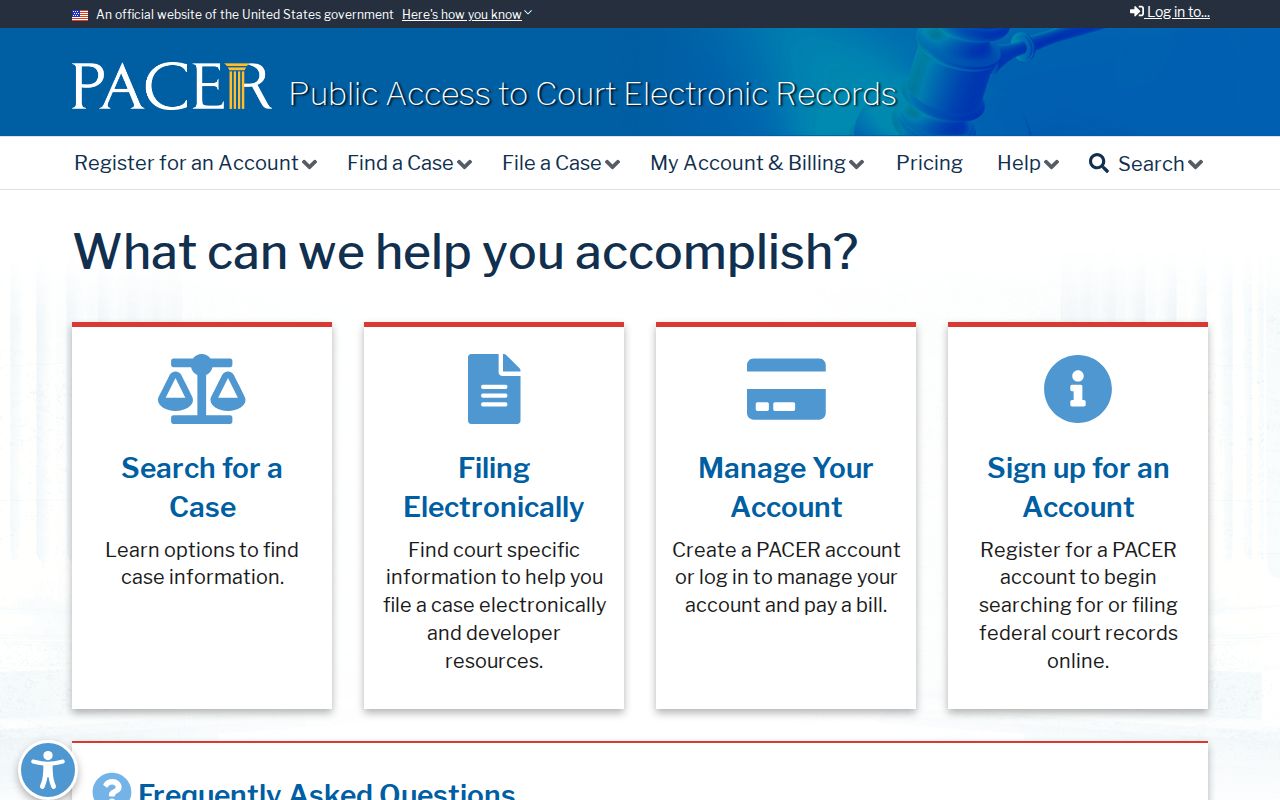
The PACER image marks a distinct jurisdiction, not a second copy of the DeSoto Parish docket. Sealed federal matters and warrants will not be exposed merely because a name is searched. Contact the federal clerk for archival access questions.
Access & Restrictions
The DeSoto Parish Clerk states that criminal records are public except juvenile matters and records sealed by the 42nd JDC. Louisiana's public-access principle and R.S. 44:1 apply broadly, but court rules, privacy protections, and law-enforcement exceptions in Title 44 can limit particular material. A public docket may redact identifiers even when paper documents can be inspected in redacted form.
If a DeSoto Parish case is missing, ask the Clerk whether it is older, indexed under another spelling, juvenile, sealed, or held by a mayor's court. Do not demand confirmation of a sealed file. Expungement removes qualifying material from public access without destroying it, so authorized agencies may still retain access. A person correcting a state rap sheet should obtain the certified DeSoto Parish disposition and follow LBCII's process because the Clerk cannot edit LACCH directly.