
How to Check Criminal History in Mansfield
Start by defining the record. An MPD report describes the event from the agency's perspective. A DeSoto Parish Sheriff's Office booking shows custody and intake allegations. The DeSoto Parish Clerk records what prosecutors filed and what the 42nd Judicial District Court decided. A city citation may remain outside the parish docket. This five-step sequence prevents a common mistake: treating one database as a complete history.
- Contact Mansfield Police Department for an MPD-created incident, arrest, crash, dispatch, audio, or video record.
- Identify the report by number when possible, or give the event date, approximate time, location, and requested component.
- Ask Mansfield city officials for the current mayor's-court clerk and citation process when the matter is an ordinance or local traffic case.
- Check DPSO for booking or custody and the Clerk's ClerkNet system or counter for a parish prosecution.
- Use LSP/LBCII self-review when the subject needs their own fingerprint-supported Louisiana history.
An online miss is only a cue to change channels. Spelling, aliases, an incomplete date range, an older paper file, or reporting lag can all separate related records.
Why Mansfield Is the Parish Record Hub
Mansfield is both DeSoto Parish's seat and its largest incorporated place. That status concentrates several record layers near the city: MPD at 700 Franklin Street, the Clerk's main office at 101 Texas Street, and a separate Archives Building at 214 Washington Avenue. U.S. 84 and U.S. 171 also make Mansfield the practical center for people coming from elsewhere in the parish.
The concentration does not merge custody. MPD controls records it creates, DPSO controls sheriff and jail material, the district attorney controls charging decisions, and the Clerk maintains the court file. A requester should therefore name the originating agency and the specific record sought. Asking a clerk for a police narrative or asking MPD for a certified district-court disposition sends the request to the wrong office.
The city also has a historical identity tied to the Battle of Mansfield, so genealogy or older-case research can span modern court files and archival holdings. The dedicated Archives Building is the strongest fallback when a name search does not surface a pre-digital matter.
The Mansfield Police Department
The Louisiana state directory entry for Mansfield Police lists the department at 700 Franklin Street, Mansfield, LA 71052, with telephone 318-872-0520. Call 911 only for emergencies. No verified official records-request form, records email, fee schedule, or counter hours appeared in the project research, so telephone confirmation is necessary before a visit or copy order.
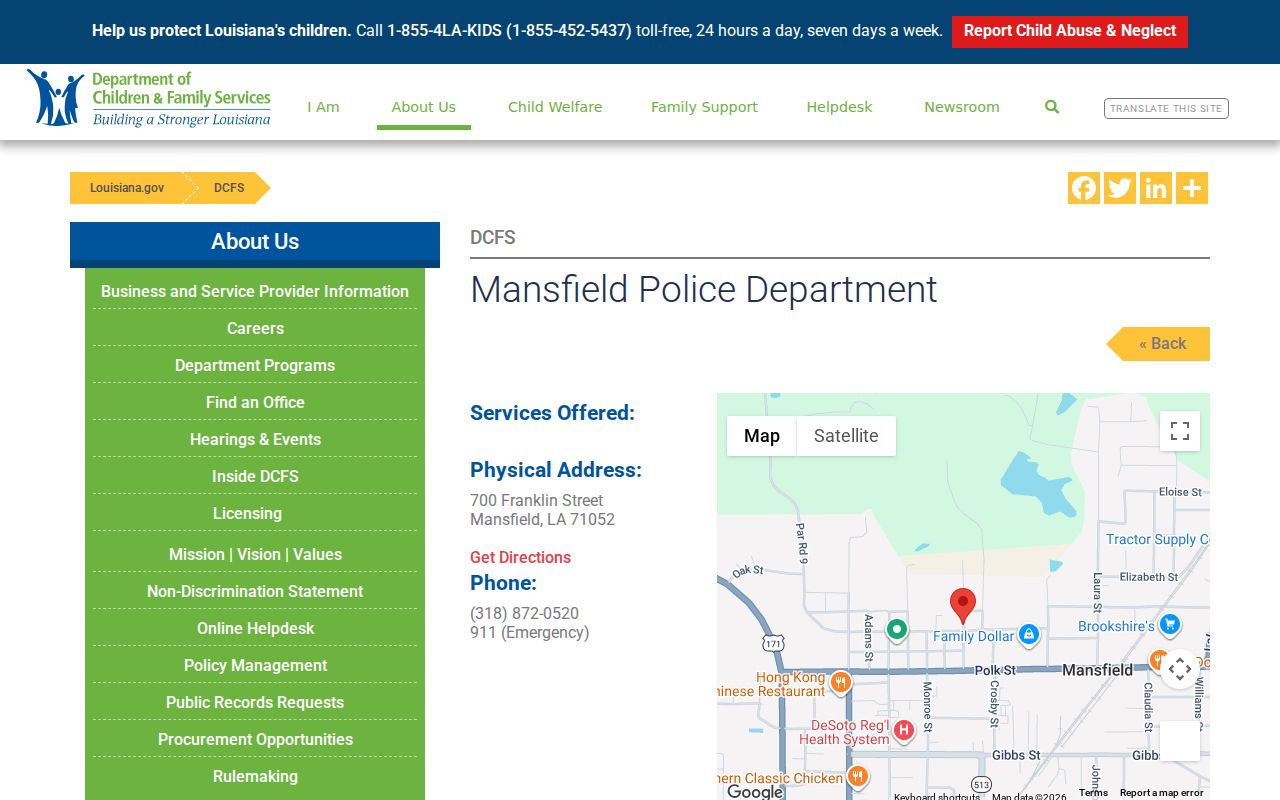
The directory image provides a reliable contact anchor, but it does not establish release rules or promise that a particular report is public.
A useful request describes an existing record rather than posing questions. Include requester contact information, report or incident number if known, event date and time, location, and whether the request is for an incident report, arrest material, crash record, CAD entry, 911 audio, or video. Ask whether electronic inspection is available, whether certification is needed, and for an estimate before copies are made.
The Four-Office Mansfield Pathway
Mansfield produces a particularly clear four-office trail. First, MPD retains the narrative and agency media for an incident it investigated. Second, DPSO creates the booking and custody entry if the person enters the parish jail. Third, the district attorney determines whether an allegation becomes a filed charge. Fourth, the Clerk records citations, charging instruments, arraignments, minutes, filings, and dispositions in the 42nd JDC file.
Each record answers a different question. A booking proves intake, not guilt. A police report may describe an incident that never leads to prosecution. A filed count may differ from the initial booking label. Only the court file shows dismissal, plea, trial result, sentence, or other disposition. For a reliable self-review, compare names, dates, agency identifiers, case numbers, and charge statutes across all available layers.
If the court result is missing from a statewide fingerprint history, obtain a certified disposition from the Clerk before contacting LSP/LBCII about correction. If a local report itself is wrong, begin with MPD. Corrections must go to the custodian that owns the disputed field.
Arrests and Bookings in Mansfield
A custodial Mansfield arrest ordinarily moves into the DeSoto Parish custody system. MPD remains the source for its incident narrative, while DPSO controls the parish booking entry. The official DPSO website and its mobile app may expose arrest, inmate, most-wanted, tip, contact, or form modules, but module availability can change. A detention telephone or records request remains important when the interface is incomplete.
Look for the booking number and time, arresting agency, listed charges, bond information, holds, custody status, and release information if published. Do not infer a conviction from any of those fields. The district attorney may decline, amend, dismiss, or replace an intake allegation, and the court docket is the record of that later process.
An LSP Troop G arrest follows the same custody and court chain, but the originating report stays with LSP. A citation can create a court matter without a jail booking. Those two situations explain why searching only the DPSO roster can miss relevant Mansfield activity.
Mansfield Municipal Court Records
Louisiana R.S. 33:441 authorizes a mayor's court to hear municipal ordinance violations. No verified Mansfield online municipal docket was found, so a requester should call city government or MPD to confirm the current clerk, session schedule, citation lookup procedure, copy method, and any fee. Never assume a city citation appears in ClerkNet, which serves the parish district-court layer.
| Court Name | Mansfield mayor's or municipal court; confirm the current official style with city government |
|---|---|
| Case Types Heard | Municipal ordinance and qualifying local citation matters under R.S. 33:441 |
| Case Lookup Channel | Telephone or counter inquiry; no official public online docket verified |
| What the Docket Shows | Citation identity, charge or ordinance, setting, minutes, and disposition as maintained by the court |
| Copies & Fees | Ask the current clerk about inspection, electronic copies, certification, and cost before ordering |
Provide the defendant or citation name, citation number, issuing agency, offense date, and the exact disposition or certified copy sought. A parish misdemeanor or felony belongs in the 42nd JDC, not the city docket.
Official Mansfield Sources at a Glance
The official City of Mansfield website is the appropriate starting place for current city-government notices and departments.
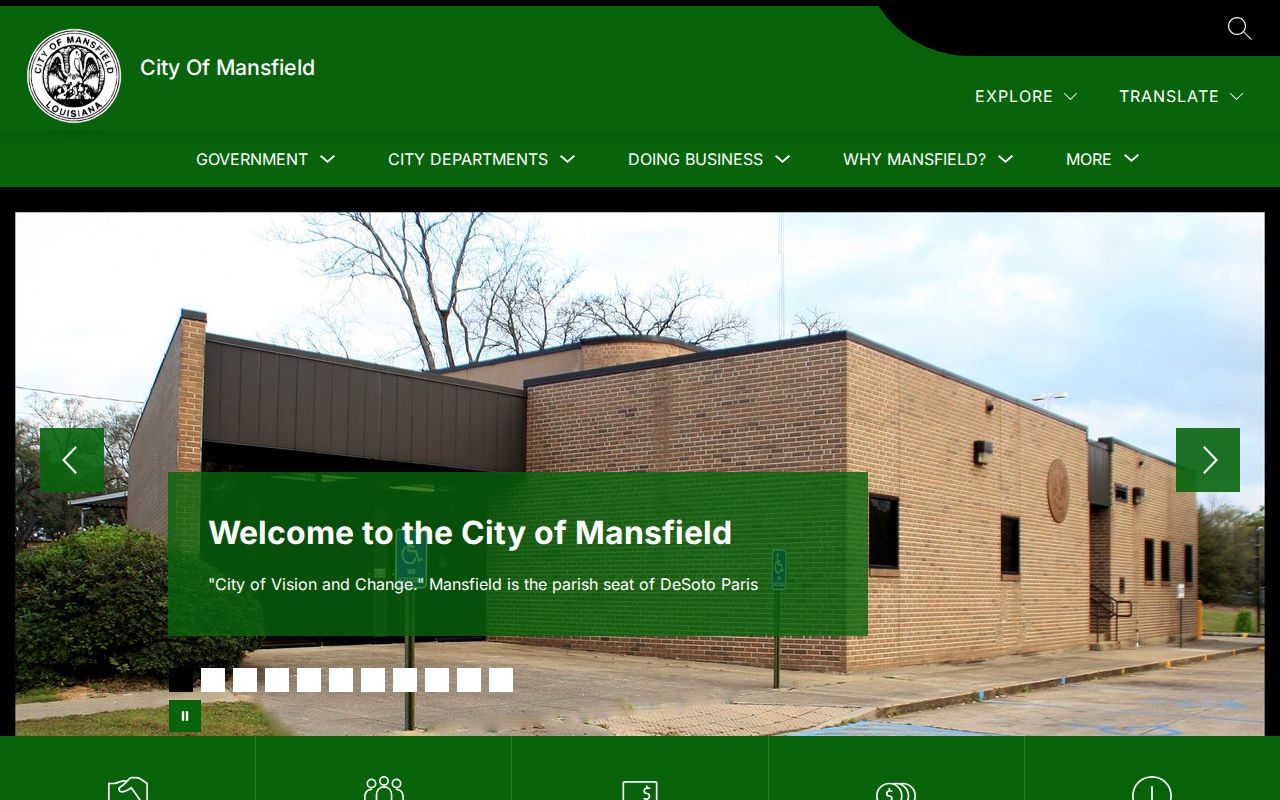
The city source helps confirm municipal channels, while parish criminal cases still belong with DeSoto's court offices.
Louisiana's public-record definition in R.S. 44:1 frames what records held by public bodies may be subject to inspection.
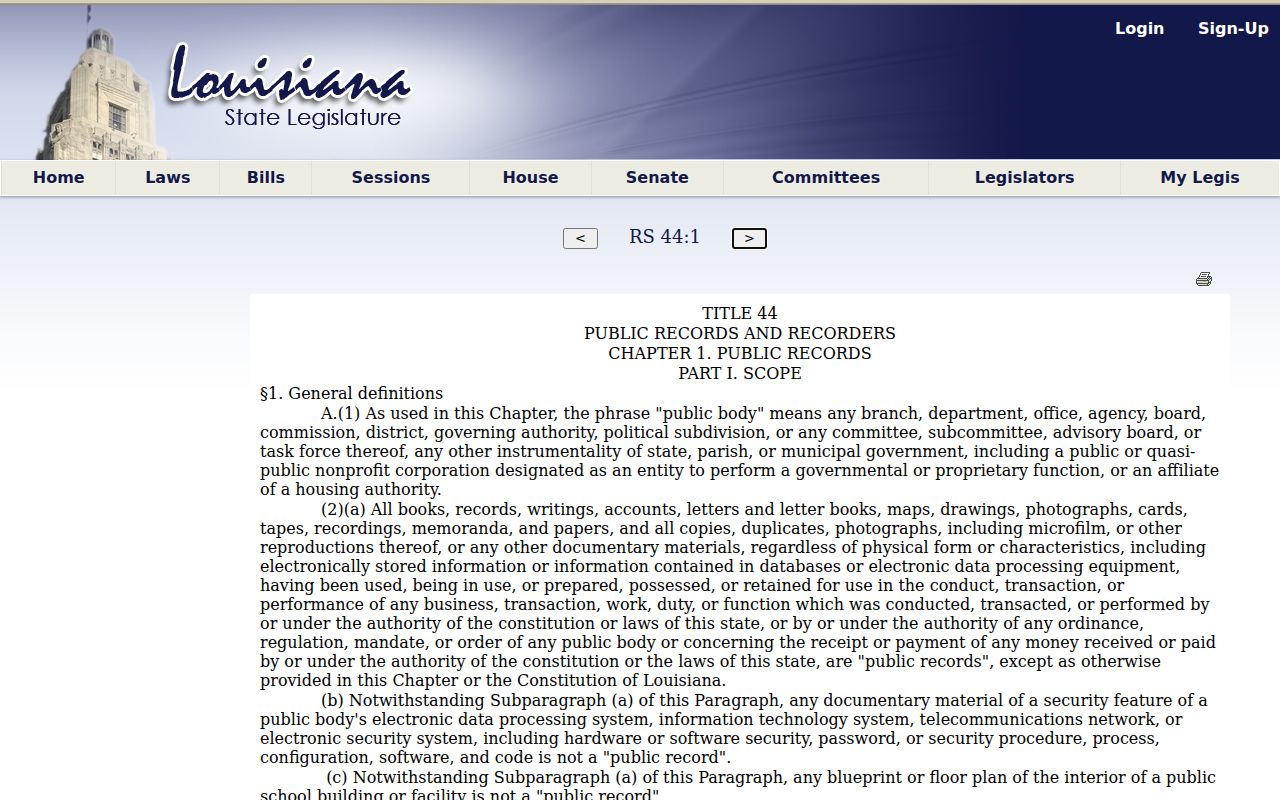
That definition works with exceptions, including law-enforcement limits, so it is a starting rule rather than a guarantee of complete release.
Where Mansfield Records End Up
Local records move by function rather than into one universal file. MPD creates an agency report. DPSO adds custody data for a parish booking. Prosecutors and the Clerk build the 42nd JDC case. Fingerprint-supported events and dispositions may enter Louisiana Computerized Criminal History at LBCII, while corrections information after sentence belongs to DPS&C.
Record flow: Mansfield Police Department › DeSoto Parish booking and 42nd JDC › Louisiana Department of Public Safety and Corrections, LBCII
Recent activity is most likely to be clearest at the originating agency or jail. A completed local prosecution is best verified at the courthouse. LACCH is identity-based statewide history, not a substitute for every local narrative or city citation. Louisiana has no comprehensive free statewide trial-court portal, which makes ClerkNet, the counter, and Archives essential local channels.
When ClerkNet Does Not Show the Case
ClerkNet is useful, but an online miss does not establish that a Mansfield case never existed. Try alternate spellings, especially the official “De Soto” form seen in some state and federal sources, aliases, and a wider year range. Then contact the Clerk at 101 Texas Street, 318-872-3110, weekdays 8:30 a.m. to 4:30 p.m.
For older or off-site papers, call the Archives Building at 214 Washington Avenue, 318-270-6207. Give the case number if known, defendant name, approximate year, and whether inspection, ordinary copies, or certification is needed. Published Clerk information states that ordinary criminal documents other than minutes cost $1 per page, certification adds $5 per document, court-minute extracts are $10 per date, and certification adds $5. Reconfirm current charges before ordering. The Clerk states that credit and debit cards are not accepted for criminal copies.
What Mansfield Expungement Changes
The mayor's-court jurisdiction statute helps determine which court owns a city ordinance record.
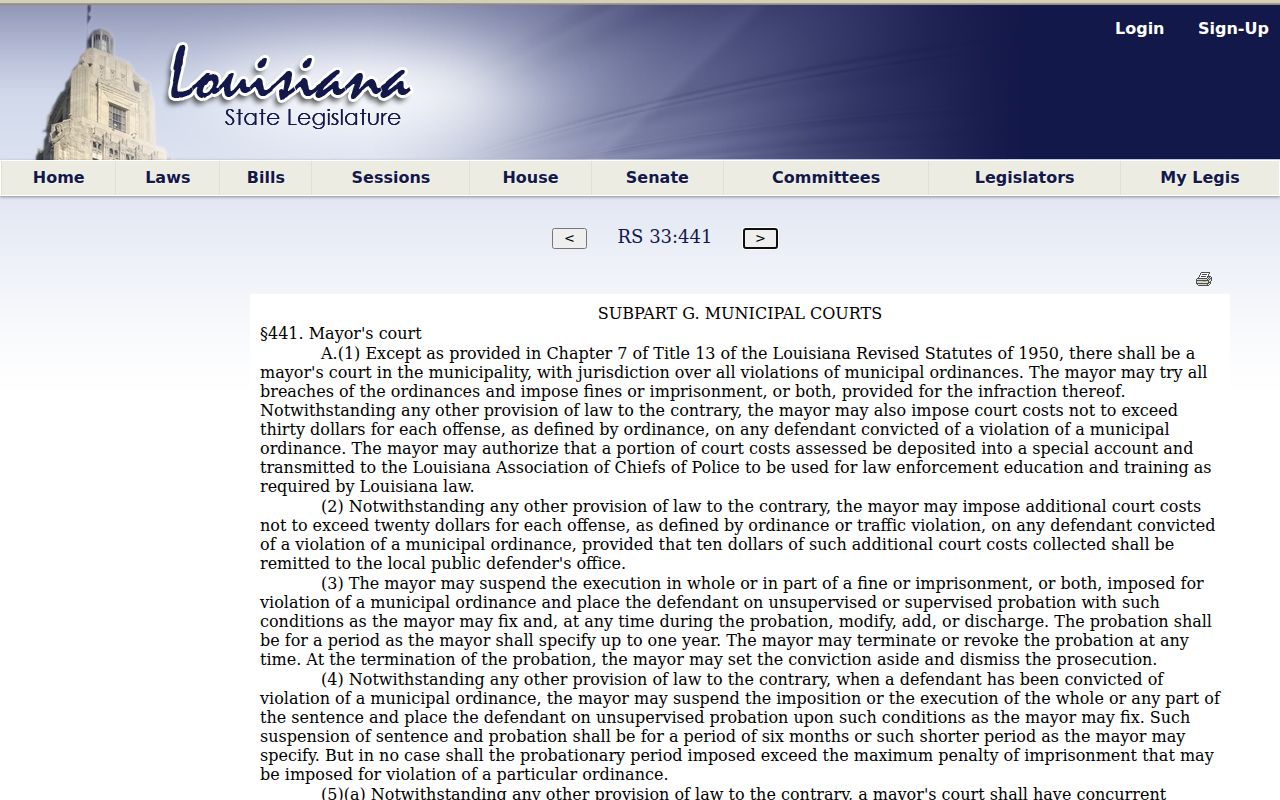
Identifying the correct court matters because an expungement request must follow the record into the court empowered to act.
Louisiana expungement removes qualifying arrest and conviction material from public access but does not destroy it. Eligibility depends on the case outcome and statute, and public interfaces may update on different schedules. A person reviewing their own history should preserve the signed order and certified disposition, then check MPD, DPSO, Clerk, and LBCII layers as appropriate. An accurate historical arrest does not disappear merely because a charge was dismissed unless the legal expungement process applies.
Public Access Rules for Mansfield Records
The Louisiana Public Records Law applies to city police and municipal records, but access is subject to specific exceptions. Active-investigation information, juvenile material, victim-sensitive details, medical information, confidential sources, and parts of audio or video may be withheld or redacted. Ask the custodian to segregate and release nonexempt portions rather than treating a partial exemption as a reason to abandon the request.
Key Statutes:
Louisiana Public Records Law, R.S. 44:1 - Defines public records and the public bodies that hold them.
Louisiana R.S. 44:3 - Provides law-enforcement exceptions that can limit disclosure.
Louisiana R.S. 33:441 - Authorizes mayor's-court jurisdiction over municipal ordinance violations.
For a practical request, describe a narrow existing record, request electronic delivery, ask for a cost estimate, and state whether certification is required. If the city does not hold it, ask which agency created the record rather than assuming every Mansfield event belongs to MPD.